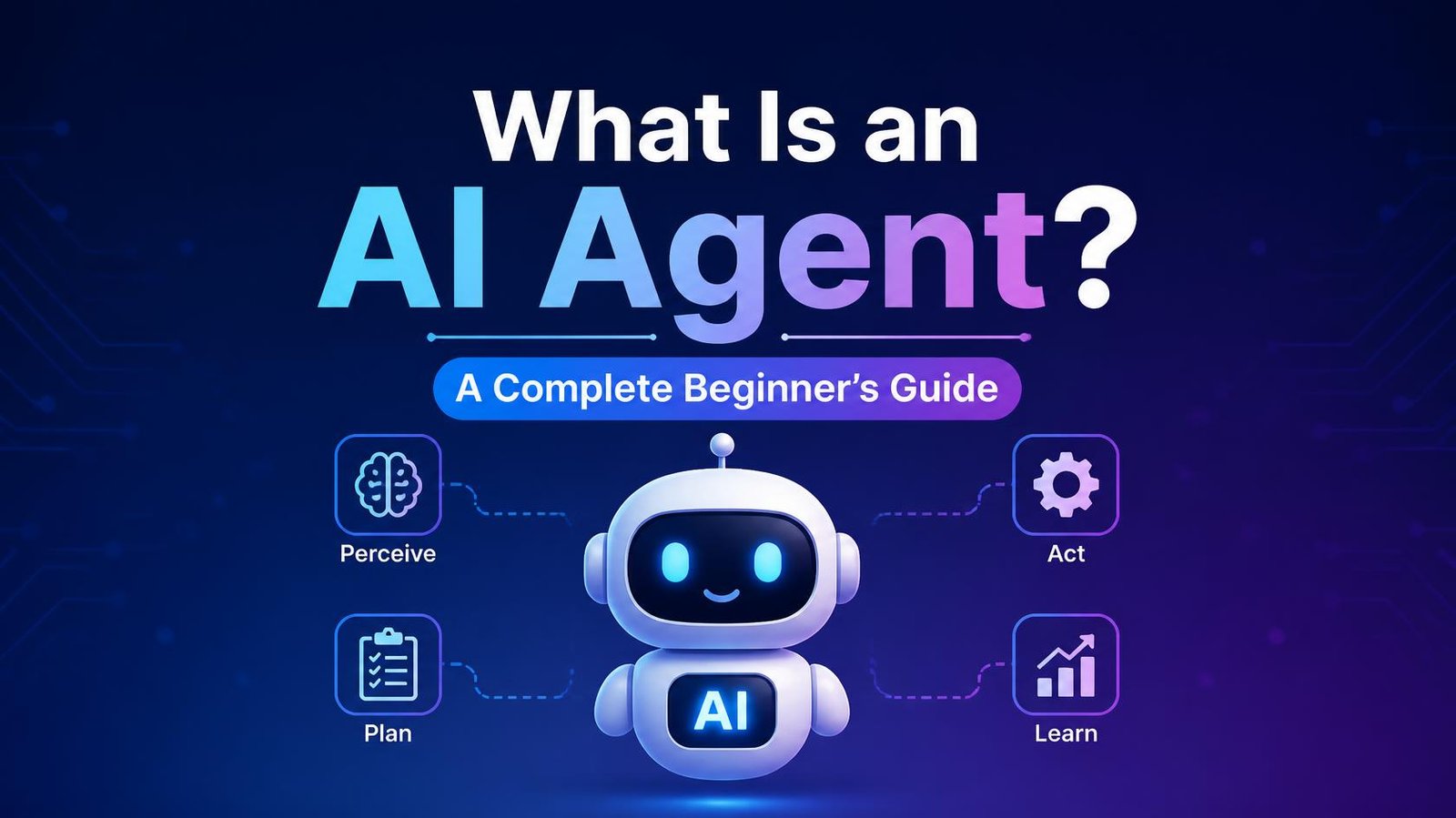
What Is an AI Agent? A Complete Beginner’s Guide
Imagine having a personal assistant that can plan your work, solve problems, use multiple apps, and keep working even while you’re away. That’s exactly what an AI agent is built to do.
Unlike ordinary AI tools that wait for your next prompt, AI agents can analyze situations, make decisions, and complete tasks independently to achieve a specific goal.
In this beginner-friendly guide, you’ll learn what AI agents are, how they work, the different types available today, practical examples, their benefits and limitations, and what the future holds for this rapidly growing technology.
This guide explains everything you need to know about AI agents—from how they work and the different types available to real-world applications, key benefits, common challenges, and what the future of AI agents looks like.
What Is an AI Agent?
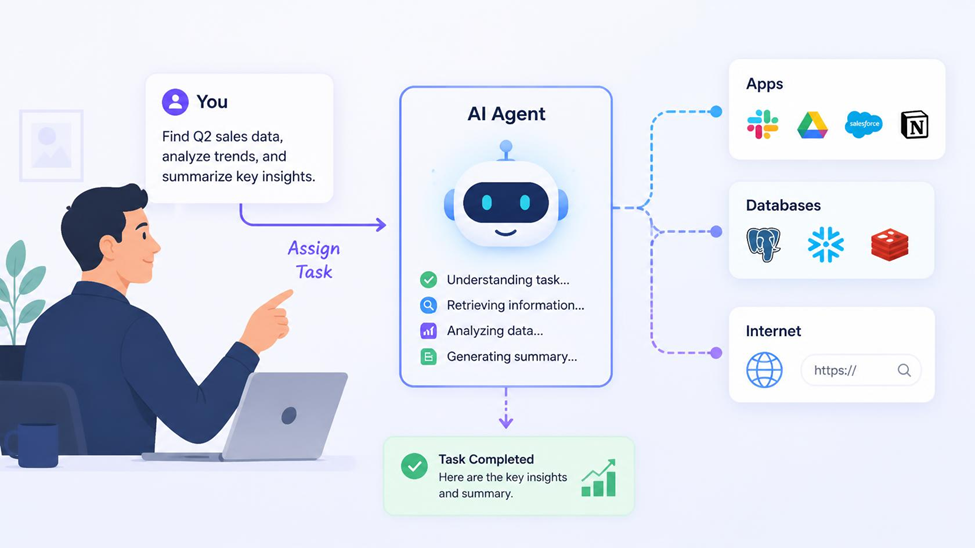
An AI agent is an intelligent software system that can observe its environment, make decisions, and perform actions to achieve a specific goal.
Unlike traditional software that only follows fixed instructions, AI agents can evaluate situations, adapt to new information, and choose the best action based on their objective.
Think of it this way:
- A calculator only performs calculations.
- A chatbot mainly answers questions.
- An AI agent can plan, reason, make decisions, use tools, and complete tasks on your behalf.
How Does an AI Agent Work?
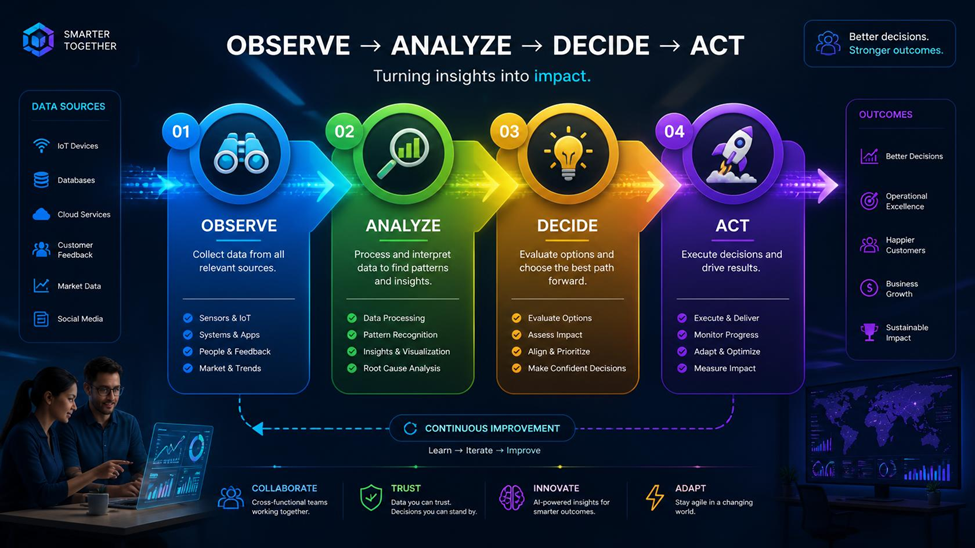
Although AI agents may seem complicated, they generally follow a straightforward process.
Step 1: Observe
The agent gathers information from its surroundings.
This information may come from:
- User input
- Cameras
- Sensors
- Databases
- APIs
- Websites
Step 2: Analyze
Next, the AI processes the collected information.
Using machine learning, reasoning algorithms, or large language models (LLMs), it determines what the data means.
Step 3: Decide
Based on its goal, the AI chooses the most appropriate action.
For example, a customer support AI agent may decide whether to:
- Answer a question
- Escalate the issue
- Process a refund
Step 4: Act
Finally, the AI performs the selected action.
This could include:
- Sending an email
- Booking an appointment
- Writing code
- Creating reports
- Ordering products
- Scheduling meetings
Many advanced AI agents repeat this cycle continuously until the objective is completed.
AI Agent vs Traditional AI
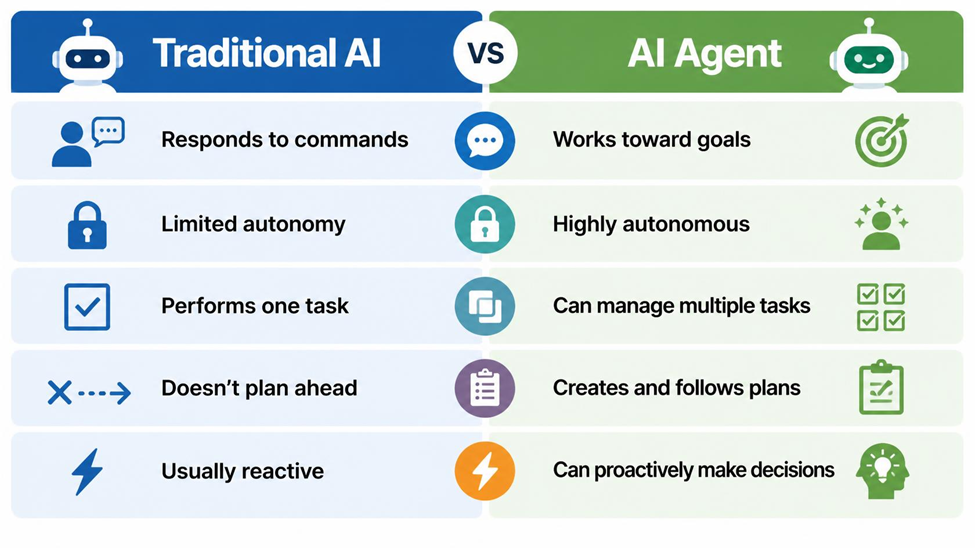
Although both AI agents and traditional AI use artificial intelligence to solve problems, they operate in very different ways. Traditional AI is designed to respond to specific commands or perform a single task, while AI agents can make decisions, plan actions, and work toward a goal with minimal human intervention.
Types of AI Agents
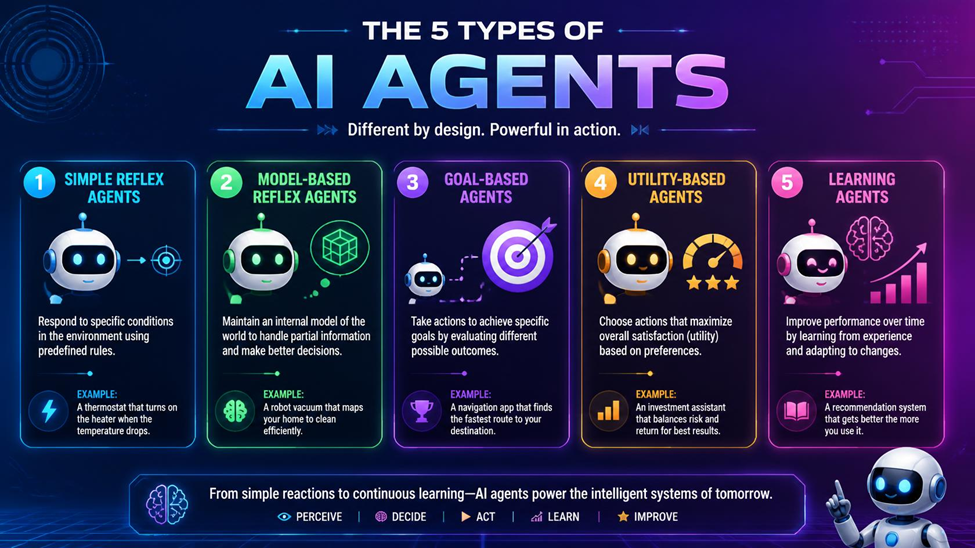
Not all AI agents work in the same way. Some are designed to react instantly, while others can plan ahead, learn from experience, and even collaborate with other AI systems. Understanding these types makes it easier to see how AI is used across different industries.
1. Simple Reflex Agents
Simple reflex agents are the most basic type of AI agent. They respond to specific inputs using predefined rules and don’t remember past events or consider future outcomes.
Example:
A motion sensor that automatically turns on the lights when someone enters a room.
Best for:
- Basic automation
- Rule-based systems
- Predictable environments
2. Model-Based Reflex Agents
These agents maintain an internal model of their environment. Instead of reacting only to the current situation, they use stored information to make better decisions.
Example:
A robotic vacuum that remembers where furniture is located and avoids obstacles while cleaning.
3. Goal-Based Agents
Goal-based agents focus on achieving a specific objective. They evaluate multiple options before selecting the best course of action.
Example:
A GPS navigation system calculating the fastest route based on traffic conditions.
These agents are more flexible because they plan before acting.
4. Utility-Based Agents
Utility-based agents go one step further by comparing different outcomes and selecting the option that provides the greatest overall benefit.
For example, an investment AI may evaluate risk, return, and market trends before recommending where to invest.
5. Learning Agents
Learning agents improve their performance over time by analyzing previous experiences and adapting to new information.
This is the type of AI behind many modern applications, including recommendation systems and advanced virtual assistants.
Examples include:
- Personalized shopping recommendations
- Fraud detection systems
- AI-powered language models
- Autonomous robots
Real-World Examples of AI Agents
AI agents are used across many industries to automate tasks and improve efficiency. They provide customer support, manage schedules and emails, assist doctors with medical analysis, help self-driving cars navigate safely, detect fraud in banking, and support developers by writing code, debugging software, and conducting research. These real-world applications show how AI agents can work independently to solve complex problems and boost productivity.
Benefits of AI Agents
As AI technology continues to evolve, AI agents are helping businesses and individuals become more productive.
Increased Productivity
AI agents can perform repetitive tasks around the clock without getting tired. This allows employees to focus on creative and strategic work.
Faster Decision-Making
By analyzing large amounts of data in seconds, AI agents can identify patterns and recommend solutions much faster than humans.
Improved Accuracy
Many AI agents reduce human error by following consistent processes and continuously learning from new data.
Cost Savings
Businesses can automate routine operations, reducing operational costs while improving efficiency.
Better Customer Experience
AI agents provide instant responses, personalized recommendations, and 24/7 support, leading to higher customer satisfaction.
Limitations of AI Agents
Despite their advantages, AI agents aren’t perfect.
Limited Understanding
AI agents can misunderstand unclear instructions or lack the broader context that humans naturally recognize.
Data Dependency
Their performance depends heavily on the quality and quantity of available data. Poor data often leads to poor decisions.
Privacy and Security Risks
AI agents frequently process sensitive information, making strong cybersecurity and data protection essential.
High Development Costs
Building advanced AI agents requires significant investment in software, computing power, and skilled professionals.
Ethical Concerns
Organizations must ensure AI systems are transparent, fair, and free from harmful bias.
Best Practices for Using AI Agents
To get the most value from AI agents:
- Define clear goals before deployment.
- Start with small, low-risk tasks.
- Monitor performance regularly.
- Keep human oversight for important decisions.
- Protect sensitive data with strong security measures.
Common Mistakes to Avoid
Many organizations struggle with AI adoption because they make avoidable mistakes.
Avoid these common issues:
- Expecting AI to solve every problem.
- Ignoring data quality.
- Skipping human review.
- Using AI without clear objectives.
- Neglecting privacy and compliance requirements.
The Future of AI Agents
AI agents are becoming more capable every year. Instead of completing only one task, future AI agents will likely manage entire workflows, collaborate with other AI systems, and adapt to changing situations with minimal human input.
We’re already seeing AI agents assist with software development, scientific research, customer service, and business operations. As large language models, robotics, and machine learning continue to improve, AI agents are expected to become even more autonomous, reliable, and accessible.
However, this progress also brings greater responsibility. Businesses and developers will need to prioritize transparency, security, and ethical AI practices to ensure these systems are used safely and responsibly.
Frequently Asked Questions (FAQs)
1. What is an AI agent in simple words?
An AI agent is a software system that can observe information, make decisions, and perform tasks automatically to achieve a specific goal.
2. How is an AI agent different from a chatbot?
A chatbot mainly responds to user questions, while an AI agent can plan tasks, use tools, make decisions, and complete multi-step objectives with minimal human guidance.
3. What are the main types of AI agents?
The five main types are:
- Simple reflex agents
- Model-based reflex agents
- Goal-based agents
- Utility-based agents
- Learning agents
4. Where are AI agents used?
AI agents are used in healthcare, finance, customer support, education, manufacturing, e-commerce, software development, and many other industries.
5. Can AI agents learn over time?
Yes. Learning agents improve their performance by analyzing new data and adapting based on previous experiences.
6. Are AI agents safe?
They can be safe when developed responsibly, monitored regularly, and supported by strong privacy, security, and ethical safeguards.
7. Will AI agents replace human jobs?
AI agents are more likely to automate repetitive tasks than replace every job. In many cases, they help people work more efficiently while creating new roles focused on AI management and oversight.
8. What is the future of AI agents?
The future points toward more autonomous, collaborative, and specialized AI agents that can handle increasingly complex tasks while working alongside humans.
Conclusion
AI agents represent the next step in the evolution of artificial intelligence. Unlike traditional AI systems that simply respond to commands, AI agents can observe their environment, analyze information, make decisions, and take action to achieve specific goals with minimal human intervention. From automating repetitive tasks to supporting complex business decisions, they are transforming industries and changing the way people work.
Although challenges such as privacy concerns, ethical issues, and implementation costs still exist, the potential benefits of AI agents are far greater when they are developed and used responsibly. Whether you’re a student, business owner, or technology enthusiast, understanding AI agents today will help you prepare for a future where intelligent automation becomes an essential part of everyday life.